Showing posts with label Ferrari. Show all posts

Thursday, February 4, 2010

Top Luxury Cars - The Ferrari F430 Spider

When I think of Ferrari, I think of one of the world's most desirable supercars with a thoroughbred pedigree that is almost peerless in the world of luxury sports cars. But that might be because I've just stumbled from the passenger seat of an F430 Spider that made me feel that no electric carriage had any right to be so comfortable whilst being so alarmingly rapid.

You'd think that the eclectic transport tastes of my family would have prepared me for this. I have a Land Rover Discovery, my brother drives a hulking Mitsubishi Warrior, but my father has always had a passion for sports cars. From Mg Midget to Porsche 911 Carrera Sport Targa to Renault Alpine, my sibling and I spent our younger years squished into seats (where more than one was available) that seemed far too close to the ground for my liking. But my word could those cars cut a dash. Whether on the motorway or country lanes, it was an education in power and handling.

Whilst I might hate real arachnids with a passion that borders on hysteria, there's nothing unlovable about the Ferrari F430 Spider. When a sports car loving friend decided that their most recent used Ferrari acquisition require breaking in, they proposed a weekend jaunt in the darkest reaches of Devon. I was initially sceptical, because looking at the F430 you wouldn't think that luggage was much of an option. And you'd be right. There's just about room for 2 medium sized bags in the admittedly handsome nose of the car, and you could probably squash some bits behind the seats, but overall it's advisable that you practise packing light if the Ferrari F430 Spider is going to be your transport mode of choice.

Having packed in the time-honoured frugal fashion of the frequent traveller (you'd be astonished at the diminutive size of the shoulder bag that I took for a week in Poland), I was alerted to my friend's arrival on Friday afternoon by the impressive vibrato of the Ferrari's engine a full two minutes before it hove into view at the end of my driveway.

Let me point out that we were travelling from York, a five and a half hour journey at the best of times, and one that could be the test of even the oldest friendship. Fortunately, we had something to divert us from any potential bickering over toilet stops or music choice. Because the used Ferrari dismissed any concerns about performance in the ten minutes between my house and Micklegate.

I won't bore you with the details of what two old lushes got up to in cider country (no, my friend does not answer to the name Withnail), but whilst the evenings were saved for sampling the local scrumpy, our days were devoted to the timeless novelty of feeling the wind in our hair as the glorious howls of the Spider echoed around the hills. And the thing is that I didn't feel any of the trepidation that I expected, because whilst it may have the appearance of an ethereal sprite, the F430 Spider grips the road with grim determination for a nearly unmatched driving experience.

The return journey was no less exhilarating, and it was almost with a sense of sadness that I waved goodbye as the fabulous used Ferrari took its leave. In fact, I'm not sure whether I was waving goodbye more to my friend or the car.

If you have the financial means, there's a good chance that you've already considered a Ferrari as your next luxury sports car. With the second hand car market offering exceptional savings, a used Ferrari will provide the same enjoyment as a new model, but at a more attractive price. Choosing from a specialist used Ferrari dealership will ensure that you receive tailored advice that takes into account your budget and vehicular needs.
Sir Cherrylton spent a glorious weekend with a used Ferrari F430 Spider, a good chum and plenty of local cider.
Article Source: http://EzineArticles.com/?expert=Sir_Cherrylton

Saturday, January 30, 2010

The Ferrari F430 Spider


What was intended to be a unique revision of the 1999 360 Modena, the Ferrari F430 Spider ended up existence a defence alone prowess form. Another spotless dream female of Pininfarina's, The F430 Spider is a sleek, crowning of the line in a crowning of the class, registering one of the best reviewed new cars in the V-8 collection of sports cars.

Her smooth still muscular body inclose is more than just combing to the eyes, it was specifically designed using land of the art, knock your socks off, computer assisted imaging programs that are only used by the F-1 team. Not a single discourse of action direction or pace attitude was overlooked, and the results defence broad above the rest.

Starting out with what were supposed to be impalpable adjustments in processing what was already thoughtful a refined piece of machinery, the impalpable was lost as the F430 took on a personality every her own. Her new broad finish stainless tailpipes stare downbound at the competition as her 483 horses and 343 pounds per foot of torque leave her competition staring at her hindquarters.

What seems like a small 20% increase in the Modena's original 3.6 liters of cubic capacity coupled with the larger move rumbling V-8 and the new and reinforced 4 valve cylinder heads adds up to an additional 91 horses and 67 pounds per foot of torque. For the mathematically challenged like myself that every adds up to a roaring 0-60 in just under 4 seconds and an enhanced crowning pace of 193 miles per hours. Quite a step 20% crapper provide.

The Ferrari F430 Spider was ceremoniously undraped to enthusiasts and critics alike at the 2005 Geneva Motor Show, under a cacophony of winkle bulbs and of instruction a significance of breathlessness that matched an undescribed anticipation to get her out on the open highway.

The F430 Spider came with a new and reinforced wind deflection system, a lowercase reworking provided a functionally revised redeemable top, and of instruction the updated and more-than-ready-to-show-you-what-it's-all-about instrument binnacle shone like a pharos from exclusive the vehicle. Tiny info created an obvious evidence most the newest member of the Pininfarina family, right downbound to the embossed driver's side analyse mirror shell telling curious onlookers that of instruction this is an original F430.

With a sleeker central tunnel and electronic differentials that screamed of creative innovation, everything from the basic lines and eye pleasing corners of the automobile to the traction and direction improvement aimed for every types of roadway conditions oozed out over the Ferrari F430 Spider's sudden explosion onto the automobile scene.

Of course, onlookers marveled at the steering wheel mounted well intellection out original organisation of the commutator alter allows for hurried and easy ordered up of the car's adjustment features. The body shape underwent extensive testing to display an every out hard to improve upon organisation that includes such features as a pronounced molder that is handsomely integrated in the engine cover, which is delicately covered in glass, gift it the appearance of a casing just for the heart of the beast. The larger rear intakes pronounce the vehicle's muscular heart, belying its flowing pose. The rear framework cleverly incorporates a diffuser of broad class, land of the prowess competitive nature. Derived from the best in racing, the 430 Spider is a conglomerate of broad tech features that smooth into one easy to handle broad test version of Pininfarina's instance tested action cars. Unlike innumerable equal models and redesign hot shots, the F430 Spider comes to the floor without redundancy.

At 177.6 inches in length and 75.7 inches wide, the F350 spider came with more lick for its filler than every of her predecessors. The mollycoddler that gracefully meets both intakes handsomely and effectively drives the F430 toward the connector as she picks up speed, proving that functionality doesn't have to land anything other than beautiful. The intakes themselves are course a postscript of the 1961 dream run in the F-1 Championship. Inspired by practice still reflecting a modern era of intensity, the power of these pure designs is a bit overwhelming in their strength and subtlety.

Just like every procreation of Ferrari super creations, the F430 Spider has had every discourse of performance, call and function considered, perfected, and reconsidered to display what only the Ferrari study could produce. This $200,000 dream organisation is untouchable by most standards but carries her grace just like the rest of the Ferrari family. Critics fresh condemned Ferrari for their Hellenic move to original design, encouraging them to step outside the box. What these critics don't realize is that the Hellenic move to original organisation is exactly what creates the Ferrari family, and to deviate from it would be blasphemous to the Ferrari principles.

The F430's grace on the eyes translates equally to grace on the road way. With the sleeker and more aerodynamic suspension, the finely tuned body design, and the tending to every possible functional detail, the F340 glides over the roadway with an ease that is reminiscent to sailing on cloud rough skylines. A driver crapper feel his possess pulse throb through his chest as he cranks her over for the first time, the pulsing of the engine practically begs for attention. Her desire for heat winkle pace crapper predominate the driver's, and in fact crapper discourage those who have never felt the power of broad collection F-1 rumbles underneath their fingertips.

As is genuine to the Ferrari legacy and good name, with each new unveiling, there module be cars ahead of the F340 that module create an equal stir. But the F340 module fight to be unforgotten, and in fact module readily invoke herself into one of those legendary classics that screamed onto the broad action automobile scene and refused to kibosh screaming ever since. She module be a perpetual revel and take her rightful place among the queens of the speedway, her pulsating thrum module echo for generations to concupiscence after, learn from, and bitterness along the way.

About the Author

Saulius Narunas works for sport-cars.org where you crapper also read most Cars

Wednesday, January 27, 2010

The Rise of the Ferrari


When asked to study a supercar who wouldn't hit Ferrari on the tip of their tongue. What teen pupil didn't hit pictures of shiny red Ferraris on their bedroom wall? But where did the famous brand of Ferrari come from and who is the man behind the legend?

Enzo Ferrari was born in Modena, Italy, on 18th February 1898. His family owned a foundry and Enzo mutual a shack above the work with his brother Alfredo, waking to the sound of hammering when work started in the mornings.

The teen Enzo saw his prototypal automobile race in 1908 with his father. The whole environment of the outcry crowds and the colorful drivers aroused his interest.

Enzo was unnatural to leave school after the modification of his father, feat on to work in the Modeno Fire Brigade's work as a turning instructor. After a spell in the grey (which he joined in 1917), Enzo was free from obligation because of stricken health. Instead of backward to schooling, Enzo found work as a effort driver in Turin in 1918, later agitated to city to work as a racing driver for automaker Construzioni Meccaniche Nazionale. The prototypal proper race that Enzo entered was the Parma-Berceto in 1919. After that there was no looking back.

Enzo supported Scuderia Ferrari in 1929. They sponsored and drilled Alfa Romeo staff. He was head of racing at Alfa Romeo until he heard that they planned to take over Scuderia Ferrari - prompting him to leave. After that he was prohibited from competing for a some years so the factory produced machine tools and bomb accessories, although they did control to make the Tipo 815 racing automobile during that time.

The emblem of Ferrari (the prancing horse) was adoptive by Ferrari in 1923. At the Savio agency in Ravenna after a race win, Enzo met the mother of Baracca, an European expose force champion and national hero who was shot down at a teen age. Baracca had a black equid as an emblem on his planes because his squad was enrolled in a cavalry regiment. The countess asked him to use the emblem for good luck. Enzo kept the black equid as it was on the plane but additional a chromatic scenery - a symbolic colour of Modena.

Ferrari moved to Maranello in 1943. The factory had to be rebuilt in 1946 after bomb damage from World War Two. The prototypal Ferrari agency automobile was built in 1947 - the 125 Sport. It was a broad performance automobile with a V12 engine. They entered Formula One racing in 1950.

The last automobile commissioned by Enzo was the famous F40 which was revealed on the 40th birthday of the company.

Enzo Ferrari died on 14th August 1988 in Modena.

Ferrari today crapper claim 15 F1 drivers' titles, 16 F1 constructors titles, 203 F1 pole postitions and 209 F1 wins to study but a few. They attract top drivers and are legendary in the earth of Formula One. Michael Schumacher driving for Ferrari submissive F1 from 2000-2004 and cemented the locate of Ferrari as a enthusiastic racing brand.

By Rebecca Twigg

For a chance to get behind the wheel of a Ferrari (including the F430 F1 Spyder) visit the Premiere Velocity website - enthusiastic for Ferrari lease Surrey and Ferrari lease county too.

Article Source: http://EzineArticles.com/?expert=Rebecca_Twigg


Friday, January 8, 2010

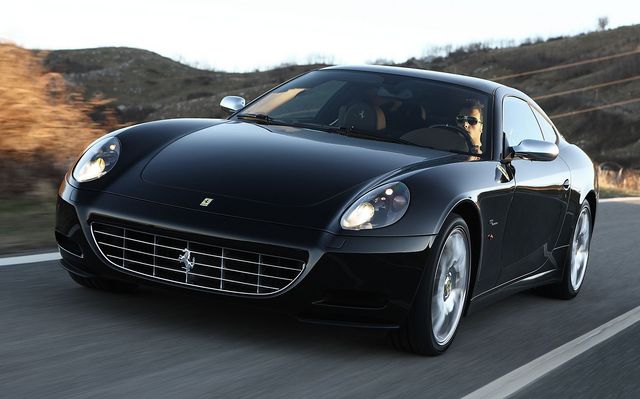
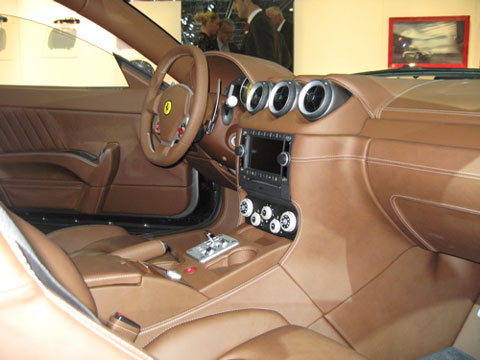
2009 Ferrari 612 Car Best Picture

2009 Ferrari 612 Front View2009 Ferrari 612 Front View

2009 Ferrari 612 Interior2009 Ferrari 612 Interior

2009 Ferrari 612 Side View2009 Ferrari 612 Side View

2009 Ferrari 612 Rear View2009 Ferrari 612 Rear View

Monday, January 4, 2010

2009 Ferrari 430 Luxury Car

2009 Ferrari 430 Car Picture2009 Ferrari 430 Car Picture

2009 Ferrari 430 Side View2009 Ferrari 430 Side View

2009 Ferrari 430 Rear View2009 Ferrari 430 Rear View

Saturday, January 2, 2010

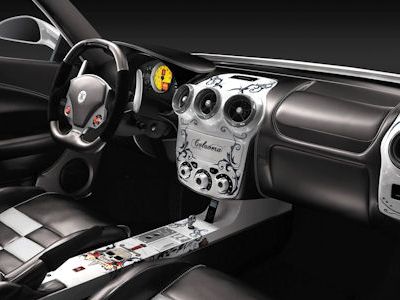
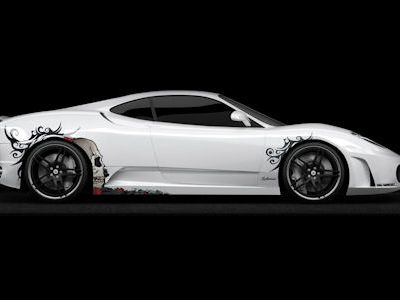
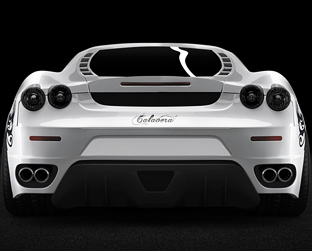
2009 Unique Sport Cars Ferrari F430 Cavalera

2009 Unique Sport Cars Ferrari F430 Cavalera Front View2009 Unique Sport Cars Ferrari F430 Cavalera Front View

2009 Unique Sport Cars Ferrari F430 Cavalera Interior2009 Unique Sport Cars Ferrari F430 Cavalera Interior

2009 Unique Sport Cars Ferrari F430 Cavalera Side View2009 Unique Sport Cars Ferrari F430 Cavalera Side View

2009 Unique Sport Cars Ferrari F430 Cavalera Rear View2009 Unique Sport Cars Ferrari F430 Cavalera Rear View

Friday, January 1, 2010

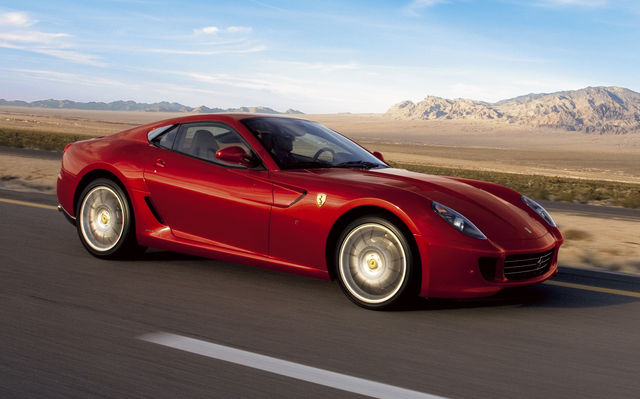
2009 Ferrari 599 GTB Fiorano

2009 Ferrari 599 GTB Fiorano Front View2009 Ferrari 599 GTB Fiorano Front View

2009 Ferrari 599 GTB Fiorano Interior View2009 Ferrari 599 GTB Fiorano Interior View

2009 Ferrari 599 GTB Fiorano Side View2009 Ferrari 599 GTB Fiorano Side View

Saturday, December 12, 2009

2010 Ferrari California Hamann CarImages

2010 Ferrari California Hamann Front View2010 Ferrari California Hamann Front View

2010 Ferrari California Hamann Side View2010 Ferrari California Hamann Side View

2010 Ferrari California Hamann Rear View2010 Ferrari California Hamann Rear View

Monday, June 29, 2009

Were to buy best BMW and Ferrari Parts?


Are you in the market for aftermarket BMW parts? If so you may find that you have to pay quite a bit for them if you go through your regular retail suppliers. Because of the BMW name you will find that retailers are able to charge and arm and a leg for the aftermarket parts. When you assume that this is what you have to pay you'll pay any price. The fact of the matter is that there are some ways in which you might be able to save.

The first thing that you need to do is check out people that you know personally. If you belong to a car club you should talk with your associates and see if anyone has the aftermarket parts that you are in need of. You may be surprised by how many people have the things that you need and are willing to sell them to you for far less than retail, or in some cases they may even be willing to trade for something that you have that they need. This is a great way to go if you have contacts in the BMW world because you can often get a great deal!

Another option is to check auction sites. There are retailers that put many of their BMW aftermarket parts on auction sites. This allows for them to move their back stock while continuing selling for a much wider profit margin in their retail store. You can find all of the aftermarket parts for your car at a huge savings when you go this route. If you are looking for big additions such as engine parts or upgrades or exhaust systems saving can mean saving hundreds or even thousands of dollars. Who couldn't stand to save that much money?

Of course another option is to keep tabs on what your retailer does with their pricing. You may be able to anticipate sales and save a lot of money on the items that you want most. This may allow you to save hundreds of dollars and if you time it right you may be able to afford to buy more than one aftermarket addition to your vehicle!

All of these great ways to save are not just associated with aftermarket parts for BMW vehicles, they apply to aftermarket Ferrari parts and those associated with all makes and models of vehicles. The fact of the matter is that luxurious vehicles such as BMW and Ferrari are expensive to upgrade and being able to save on them will allow the consumer who wants to modify their vehicle to do so more affordably.

Caitlina Fuller is a freelance writer. Are you in the market for aftermarket BMW parts? If so you may find that you have to pay quite a bit for them if you go through your regular retail suppliers. All of these great ways to save are not just associated with aftermarket parts for BMW vehicles, they apply to aftermarket Ferrari parts and those associated with all makes and models of vehicles.

Article Source: http://EzineArticles.com/?expert=Caitlina_Fuller

Tuesday, June 16, 2009

Ferrari to Start Building Hybrids?


A green hybrid from an Italian icon? It seems a bit ludicrous, but the question of whether Ferrari is going to start building hybrids is not a joke. Ferrari may have no choice.

The joke about high end sports cars is that if you have to ask how many miles to the gallon they get, you can't afford them. Put more directly, the top end performers are designed from performance. Fuel efficiency and emissions are not just downplayed, they are utterly irrelevant. At least they were.

Ferrari is the classic high end sports car builder. It builds beautiful cars that simply blaze along the road. Of course, the cost of that is horrifically bad mileage and terrible emissions. Neither Ferrari nor the people buying the car really cared. Now they have no choice thanks to the new emission rules coming into place in the European Union.

The EU is taking pollution seriously as part of its efforts to curb global warming. The practical effect on cars is the emissions being produced by them are being cut by law. The EU is demanding a cut to rough 130 grams of carbon dioxide per kilometer driven. Most Ferrari models produce about four times that amount, so you can see the problem.

The question for Ferrari is how it can continue to produce high performance cars and yet still comply with the EU emission requirements. This is particularly an issue since the requirements are expected to become even more stringent in the future. The answer by the company seems to be rooted in its F1 team.

The Scuderia, the Ferrari Formula One team, is well versed in making cars as light as possible while producing massive power and performance. The technology used there is being transferred to future Ferrari designs. The company seems bent on meeting the new standards by making the cars much lighter, more aerodynamic and even returning to a turbocharged engine. This will account for huge improvements in fuel efficiency, particularly the light cars, but a hybrid electric engine is going to be an inevitable result.

Perhaps most interesting is the potential use of the KERS system in street cars. Ferrari uses the system in F1 to some effect. KERS stands for Kinetic Energy Recovery System. It essentially produces electricity from the braking system and stores it. The driver can then push a button to add the power to the drive system when needed. It produces an additional 80 odd horsepower in the F1 cars, which is a nice jolt when needed.

Ferrari is nothing if not very inventive. The future is clearly a challenging place for low mileage sports cars. Given the prowess of Ferrari in Formula One, expect it to come out with some amazing green vehicles in the future. Prius beware!

Thomas Ajava writes for HybridCarDealerDepot.com - where you can get more hybrid car information and articles.

Article Source: http://EzineArticles.com/?expert=Thomas_Ajava

Friday, May 29, 2009

The 1957 Ferrari Racing Car


A rare 1957 Ferrari racing car has been sold in auction for record of 8 million pounds last weekend . And interestingly in these days of economic slow down the couple who had acquired the property chose to remain anonymous. They have gifted themselves a black Ferrari which has been till date the highest auctioned sell off. The buy has become a world record for the most expensive automobile ever sold at such auction.

The car that had been bought by the couple is a 1957 Ferrari 250 Testa Rossa and was described correctly as one of the most alluring racing Ferrari cars that one could possess. The car has bright red nose, sweeping black lines, huge headlights and other features that beguiled the buyer. The auction of the car took place on Sunday at Ferrari's factory and test circuit at Maranello. The place is situated in Northern Italy. The car really lives up to its name - Ferrari Leggenda e Passione. The hammer price of the car had been decided at 7.2 million pound but the 10% buyer's premium for the auction have pushed the total expense of the car to record books. The auction was organized by RM with Sotheby's and they have reportedly said that the price of the car bought was nearly 1.8 million pound more than the previous highest amount paid for such a car at an auction. The last record of the car bought at such huge price was set at the same event last year.

Max Girardo the RM managing director of Europe said, "The historical significance of this car attracted a bidding war as collectors from around the world - both in the room and on the telephone - competed to secure one of the most alluring ... Ferrari racing cars." The mystery couple has now one of the 22 pontoon fender model of Ferrari.

The car is not a general one. It had been a race winner and a powerful beast. This two seater Testa Rossa took part in 19 international championship races from the period 1958 to 1961 of which 10 were won by the car. When RM was asked about the buyer, it had declined to identify the buyer saying it against rules of auction. There were other fleets of cars too in the auction but not every lot in the auction could have been sold. There was 1967 Ferrari 330 P4 which was sold for 6.4 million pounds and the 1950 Maserati 250 F with Stirling Moss was offered for 1.3 million pound.

The auction had been a great event with the buy and RM was quick to take its pride to next level and said that their shows and auctions always attract and invite people of such taste who wish to possess such antique items for the sake of their originality and beauty. The 'pontoon fender' model is one such beautiful antique Ferrari car which any owner will take pride in.


Tuesday, May 12, 2009

The Ferrari 166 Inter


You may well ask what is a Ferrari model 166 Inter? Not too many people have ever heard of this car, and even Ferrari owners look a little confused. Why shouldn't they? The 166 was the first Ferrari road car. The Ferrari Company was primarily involved in building pure race cars. This was Enzo Ferrari's passion. However you do have to pay the bills and this was the car that started the road car business. In 1948 the Ferrari 166 introduced at the Turin Motor Show. Typical of the companies' later cars, this was powered by a V12 engine in the front. The engine had two overhead cams, one of which was on each side of the V12 banks.

Total engine capacity was 1995 cc or about 2 liters. If you were to divide the total 1995 by 12 you would get 166.25. The company dropped the .25 and the car was called the 166. Naming a Ferrari after the cubic centimeter of one cylinder is now common, and this was the first car to be named this way. The word "inter" was the way the factory would designate cars that were not built with the idea of racing in mind. However, many owners felt that a Ferrari was a dual purpose car. That is, you could drive it in a race and then drive it home. Ferrari owners were not alone in this belief, as many other sport car owners felt the same way about their brands.

The car was a two passenger two door coupe. Ferrari coupes are sometimes called "berlinetta" or a "little saloon" car. Since the 166 Inter Ferrari has built two and four passenger cars, but they all have two doors. No four doors Ferrari has been sold to date. The 166 Inter was raced and it won the Mille Miglia race in May of 1948. Cars like this continued their dual purpose role and over the years Ferrari's reputation began to grow. Total production of the 166 Inter was 36 cars over a three year span. In today's world a 105bph car capable of 120 mph would not be looked at twice. But if you would like one RM Auctions is advertising a 1949 model for sale on May 17, 2009. Estimated value is around $500,000.

Dennis Dater has been interested in cars since he learned to drive in a 1952 MG TD. He has two unique web sites that offer Honda Accord aftermarket parts. Visit him and see the products or read more articles.

http://www.accordmania.com for Accord performance products

http://www.accordtopia.com for Accord appearance products

Article Source: http://EzineArticles.com/?expert=Dennis_Dater

The Ferrari 250 GTE


When most people talk about Ferrari they think about and discuss either the single passenger pure race cars or the two passenger sports racing or the two passenger road cars. Very little is ever mentioned about the four passenger cars.

Ferrari decided to build a four passenger car so that the company could get into additional markets. However, one of the decisions he made was that it had to have two rather than four doors. To date, as far as I can tell, the factory has never produced a four door model for the general buyer.

The challenge faced by the company was to make a four passenger car on their current two seat chassis. In later years they were faced with the same problem, and they came up with the 308 GT/4, not a particularly popular car.

In 1960 they solved the problem with the 250 GTE 2+2. Was it successful? Well about 950 of them were made, which makes it the top seller in the 250 series.

The designation of 250 GTE 2+2 as the model number was based on several factors. First the 250 represented in cubic centimeters the cylinder size of one of the V12 cylinders. The GT was for Grand Touring and the E was from the 508E, a new chassis design. The 2+2 meant that the front two passengers found a normal sized area up front, and the +2 meant that two could sit in the rear. For this car the two rear seat passengers had adequate but not spacious room. Many other brands have used the 2+2 designation, but in the majority of cases, the rear area had no leg room. It was more of a marketing ploy to satisfy some government regulations about the need for larger capacity cars.

The 250 GTE 2+2 was rated at 235bhp, slightly lower than the typical 250 series car. It had an unusual gear box with four speeds and an electric overdrive. Disc brakes were fitted all around. The top speed was listed as 136mph, again lower than other 250 series models. However, keep in mind that this particular car was designed as a road car and not a sports racing automobile. Other significant factors were a generous boot to hold luggage, and improved heating and ventilation for the passenger's comfort.

While an outstanding handling car and a great touring car, the 2+2 does not rival the other 250's when it comes to the used car marketplace. It has been typical of Ferrari 2+2's that the original prices are higher than the companion two seat versions, they depreciate much faster and are less sought after by collectors. A 1961 model with 34,000 miles was recently advertised in England for $134,000. Still a lot of money for a used car, but nothing like what other Ferrari collector cars would bring.

Dennis Dater has been involved with cars for over 50 years. His first love was sports cars when he drove a 1952 MG to high school. He has produced over 40 articles for EzineArticles on cars, and almost a hundred on his web sites. His two web sites are designed for Honda Accord aftermarket accessories. Please visit him at:
http://www.accordmania.com

Article Source: http://EzineArticles.com/?expert=Dennis_Dater

Monday, May 11, 2009

The Ferrari 212


The Ferrari 212 Inter was produced from 1951 through 1953. About 80 cars were built during this time period. Typical of early cars, the factory designed and built a chassis with full engine and running gears and the buyer was able to commission a different company to build the body. This is why many early Ferrari cars carry the same model number but do not look alike.

Typical for Ferrari the 212 designated the cubic centimeters of one cylinder of the engine. So the V12 engine for this automobile was 212cc x 12 or around 2,544 cc. The actual value was 2,562 cc as values for model numbers were rounded up or down at the factory's discretion.

The basic engine was the same design as the earlier 166 Inter, however it had been bored out to increase the horsepower to 150 with two carburetors. Cars towards the end of the series received three carburetors and were rated at about 170bph. As in earlier cars the Inter models were not designed for racing, but raced they were. If you wanted one specifically for racing you chose the 212 Export model.

These cars were bodied in coupe, cabriolet and spider designs by some of the leading companies such as, Vignale, Ghia and Pinin Farina (who changed their name to Pininfarina years later). The chassis was tubular steel, a practice that you could see on cars produced through the 1980's. The transmission was a five speed manual, again a design that lasted until 1994 when a six speed manual was introduced.

Are these models very valuable? Well at a December 2008 auction a Ferrari 212 Export (remember the model designed for racing) was bid up to $1,946,000 and not sold as the reserve had not been met.

Dennis Dater has been interested in cars since he learned to drive in a 1952 MG TD. He has two unique web sites that offer Honda Accord aftermarket parts. Visit him and see the products or read more articles.

http://www.accordmania.com for Accord performance products
http://www.accordtopia.com for Accord appearance products

Article Source: http://EzineArticles.com/?expert=Dennis_Dater

Sunday, May 10, 2009

The Ferrari 250GT


Have you seen the movie Ferris Bueller's Day Off? If you have, I'll bet you remember the red Ferrari that went off a driveway and crashed at the base of a hill. Well that was a replica of a 1961 Ferrari 250GT California. Ferris and his friend Cameron looked rather stunned when they watched this car become airborne. As did all Ferrari lovers. Why was a replica used? It could have been because only 55 of these cars were made, and it is considered one of the most beautiful examples of the car maker's art.

There are really two different 250GT California cars. The first one produced from 1957 to 1960 was based on the Ferrari 250GT Tour De France, which had its top removed, and a coupe became a convertible. Pinin Farina designed these spiders and they were built by Scaglietti built them. The initial request came from Ferrari's North American importer. This run of 49 cars are now referred to as the LWB or long wheel base models.

The Ferrari 250GT SWB (Short Wheel Base) California was built from 1960 to 1963. It is considered one of the most desirable and beautiful cars ever made. How desirable? At the RM auction on May 18, 2008 a 1961 model sold for $10,894,900, setting a new record. The car had been owned by actor James Coburn, which may have helped a little in the final price.

From a mechanical standpoint the 250GT SWB was powered by a V12, rated at 280bph. Top speed was about 145mph. A little unusual was a four speed manual gearbox rather than the five speed. These particular cars now had disc brakes front and rear. The purchaser had a choice of either an aluminum or steel body.

While the 250GT series of cars set international racing records throughout the early 1960's most of the competition was done in the coupes rather than the California models.

When the average non Ferrari owner thinks of a Ferrari, chances are this is one that comes to mind, or perhaps the 308GTS shown in the Mannix TV show.

Dennis Dater has been involved with cars for over 50 years. His first love was sports cars when he drove a 1952 MG to high school. He has produced over 40 articles for EzineArticles on cars, and almost a hundred on his web sites. His two web sites are designed for Honda Accord aftermarket accessories.

Please visit him at:

http://www.accordmania.com

http://www.accordtopia.com

Article Source: http://EzineArticles.com/?expert=Dennis_Dater

Friday, May 8, 2009

The Ferrari Dino 206


Perhaps one of the prettiest cars to ever come out of the Ferrari factory was the Dino 206 and 246. Introduced in 1967 and produced until 1974 the car sold over 3,900 units which was a new record for the company for one model. This was the first mid engine road card using a V6 engine. The name came from Enzo Ferrari's son Dino, who had helped talk his father into building a V6 for the road. This introduced a new line of cars which did not carry the Ferrari brand or badges. The initial V6 engine was 1,986 cc's or about 2.0 liters and the 206 designation represented both the capacity of the engine (2.0) and the 6 was for 6 cylinders. It had a rated horsepower of 180 at 8,000 rpm which was almost unheard of for a corresponding American car.

Only 152 cars were produced until the engine was enlarged to 2,418 cc which lead to the model change called the 246GT in 1969. In 1972 a spider or open top car was introduced and called the 246 GTS. The 246 models produced 195 bph and gave the car a top speed of 151 miles per hour. These cars are still known today as being outstanding in road holding and have been compared to race cars. Initially the Dino brand did not take off as well as the Ferrari brand. Many of the early cars were mistreated and left outside, which caused a lot of rust damage. Early cars had heavy depreciation and were not a particularly sought after collector car.

Today in the marketplace this is now a desirable car and can fetch over $180,000 for an excellent example. They are a relatively small car, with a noisy engine and great fun to drive, whether on the road, on the track or part of a rally. At Ferrari car shows the Dino always attracts a lot of attention, and special class awards have been made just for this model. From what was once considered a step child of the company has now come into its own.

Dennis Dater has been involved with cars for over 50 years. He is now in the process of opening a web site which will sell only Honda Accord aftermarket automobile parts. Please visit him.
http://www.accordmania.com

Article Source: http://EzineArticles.com/?expert=Dennis_Dater

The Ferrari 308GTBi


In March of 1980 the Ferrari 308 received a major change from the exotic sports car introduced in 1975. The American legislation, along with other countries, began to restrict what could and could not be done with an engine by way of emission control standards. Up to this point the Ferrari 308 had four double choke Webber carburetors. However, the carburetor approach did not allow the cars to pass the new emission control standards. Ferrari's answer was to drop the carburetor approach and install a fuel injection system Bosch.

This almost killed the 308 line. The rated horsepower for the American model dropped from a factory number of 255 bph to one of 205 bph. Stock American street cars could outperform the 308. The car had come in two body styles, the 308 GTB or coupe and the 308 GTS or spider, which had an open top, rather than a full convertible top. The fuel injected models added the letter i for injection so the models become the 308 GTBi and the GTSi. Of all of the used 308 models available these became the least desirable, because of the decrease in horsepower.

For Ferrari they still sold a lot of the injected cars. Around 494 GTBi and 1743 GTSi models were produced in a two year time span.

While the power was way down, the car was still a mid engine sports car. A mid engine means that the majority of the engine is located between the front and the rear axle. Front engine cars have most of the engine weight in front of the front axle and rear engine cars, like the VW, have most of the engine behind the rear axle. By using a race proven design of a mid engine the 308s were still very nimble cars on a twisty road or on the track. They made up for the lost horsepower by their exceptional handling.

While the 308's came in the two unique body styles there were many other differences in the cars that Ferrari was producing. The cars designed for the American market had to meet certain safety standards that the rest of the world did not impose. So the American version weighed more, had different gearing and some features like side markers were different. The European versions had a top speed of 147 miles per hour, and the U.S. models under 140 miles per hours.

Dennis Dater has been interested in cars since he learned to drive in a 1952 MG TD. He is opening two unique web sites to offer Honda Accord aftermarket parts. Visit him and see the products or read more articles.
http://www.accordmania.com for Accord performance products.

Article Source: http://EzineArticles.com/?expert=Dennis_Dater

Friday, March 27, 2009

Best Sports Car Is A Ferrari


The classic look of the Ferrari is its blazing race red color (Rosso Corsa) alongside the prominent black steed on canary yellow background topped by the Italian flag. Colors have been the essence of luxury when it comes to luxury cars. But what is the Ferrari, and how did its popularity come to be?

The Ferrari in fact began Italian Enzo Ferrari's establishment of the Scuderia Ferrari in 1929. He didn't exactly build the company for the purpose of selling luxury sports cars built for the road, but to simply provide sponsorship for the Modena-based amateur car racers and enthusiasts. Its founder, for a time, successfully raced drivers in Alfa Romeos until he learned of Alfa Romeo's intent to purchase Scuderia.

This forced Enzo to inevitably carry on with Scuderia Ferrari on his own. What made this great man begin the huge Ferrari sports car empire? It was a result of the need to finance the Scuderia that he actually reluctantly sold the very first Ferrari, dubbed the 125 S, in the year 1947.

However, the force that was Ferrari did not come to be as a result of just an image of luxury and prestige, since Enzo did not desire to even begin sales of his racecars. What gave the Ferrari its niche market was its beautiful design and breakneck driving speeds.

Knowing this particularly interesting history; speed up to the present and we have the sports car giant Ferrari still holding true to its reputation of beauty and speed.

The fastest Ferrari sports car to date is the 2002 Ferrari ENZO, designed by the Pininfarina design house. The new-found speed of the Ferrari ENZO comes from the fact that every bit of the design aspect of this model serves a particular speed or aerodynamic function.

The Ferrari ENZO is a testament to its Formula 1 participation, creating a statement both on the race track and on the exotic and fast sports car lists. For one, its sleek and pointed front were designed to facilitate the airflow, helping cool the brakes and the engine during the heat of a race. The entire body's shape is to create effective aerodynamics and reduce drag.

Beginning with the Ferrari ENZO is the option for buyers to personalize the Ferrari's cockpit in order to best suit their taste and needs.

Enzo Ferrari built an empire on the statement of beauty and speed. With its continued patronage for these two values through the years, expect Ferrari to continue being a force to be reckoned with.

About the Author

Information on giraffe facts can be found at the About Animals site.

Sunday, March 22, 2009

The Ferrari F355


The Italian performance car producer Ferrari created the Ferrari F355 between nineteen ninety four and nineteen ninety nine, a production lifespan of five years. The F355 was introduced as a successor of the V8 powered, 2 seater, Ferrari F348. The F355 was succeeded by the Ferrari 360 after its production run ended in nineteen ninety nine. The F360 made improvements to the body of the car, including a lighter yet stiffer chassis and a more smooth and rounded styling, compared to the more straight edges of the Ferrari F355. The F360 was later replaced by the F430, a car similar in aesthetics.

The Ferrari F355 is a 2 seat coupe which is powered by a mid V8 engine, an engine which was notable more powerful than that fitted to the Ferrari 348, with five valves per cylinder and an increase in capacity. The three point five litre engine produced three hundred and eighty break horse power, with a top speed of one hundred and eighty three miles per hour (two hundred and ninety five kilometres per hour).

Three body styles were made available over the lifespan of the Ferrari F355; the convertible spider, the Berlinetta coupe, and the targa GTS. The first initial body styles were the coupe and targa, with the spider introduced a year after the production of the car. The Berlinetta body style is the hard top version, which was very popular. The targa body style describes the semi convertible body, whereas the spider is the full convertible model. Over eleven thousand cars were produced in the F355's life time, proving popular as a Ferrari model.

Although previous Ferrari models has their name derived from the capacity of the engine added to the number of cylinders, the F355 ended this trend with the car named after adding the engine capacity to the number of valves per cylinder, a name which indicates Ferrari's delight in this innovative achievement.

Classic Cars For Sale has Ferrari cars for sale, and more Ferrari information

Article Source: http://EzineArticles.com/?expert=Andy_Webbed

The Ferrari Mondial


The Italian sports car manufacture, Ferrari, produced the Ferrari Mondial for thirteen years, from nineteen eighty to nineteen ninety three. Ferrari is an Italian based manufacturer based in Maranello, and was founded by Enzo Ferrari in nineteen twenty eight. The extremely successful company, which has had remarkable success in Formula One, began to produce the Ferrari Mondial in nineteen eighty. The Ferrari Mondial was created in to body types; the coupe and the cabriolet, and sold in decent numbers - over six thousand units over the course of its production life span.

The Mondial succeeded the Ferrari GT4, a mid engine V8 which was produced between nineteen seventy three and nineteen eighty, when it was then replaced by the Mondial. Over its seven year life span the GT4 had sold close to three thousand units. The Mondial was styled differently than its predecessor, the GT4, with the styling left to Pininfarina, whereas the GT4 was Bertone styled.

This particular Ferrari model was a lot more practical than other Ferrari models, with extensive space compared to other cars which share the marque. A higher roof, longer doors, four seats with adequate leg room, and high visibility, proved popular whilst still maintaining the performance levels which are associated with Ferraris.

The layout of the Mondial was altered from previous Ferrari models, with the main components; the engine unit, gearbox and suspension, being all removable due to be connected to a sub frame, a feature which made it much easier for a rebuild. Indeed, this was not the only notable feature of the transmission, as the gear had a changed pattern of gears than the standard H shift pattern, with fifth now positioned behind forth, making the change from fourth to fifth much easier and efficient.

The Mondial 8 was first produced, followed by the Mondial GV. Later variations include the 3.2 and the Mondial t. The cars were produced in Modena, Italy.

Classic Cars For Sale has Ferrari cars for sale, and more Ferrari information

Article Source: http://EzineArticles.com/?expert=Andy_Webbed